Hands-On Cybersecurity Training for Higher Education
In cybersecurity, experience counts. Give students a competitive edge in the job market with experiential cybersecurity training.
Bridge the Gap Between Cybersecurity Education and Employment
Students may understand cybersecurity concepts, tools, and frameworks without having experienced what it's like to put them into practice during a realistic attack.
Cloud Range helps institutions bridge that gap with hands-on labs and live-fire cyberattack simulations that allow students to build technical skills, apply what they've learned, work through realistic threats, and gain experience using enterprise security tools.
By graduation, students don't just know about cybersecurity. They've had opportunities to do the work.

74.1% of employers say experiential learning and/or work during college is one of the most important ways students can demonstrate their skills during the hiring process.
Employers Demand Hands-On Experience
– National Association of Colleges and Employers 2026 Job Outlook 
Keep Cybersecurity Education Current
Cybersecurity threats, techniques, and technologies evolve faster than traditional curriculum cycles. Cloud Range helps faculty incorporate current threats and hands-on experiences into existing programs through continuously updated labs and live-fire attack simulations.
Students can build foundational skills and then apply what they've learned as they investigate and defend against realistic cyberattacks.
Bring Capture the Flag to Live-Fire Simulations
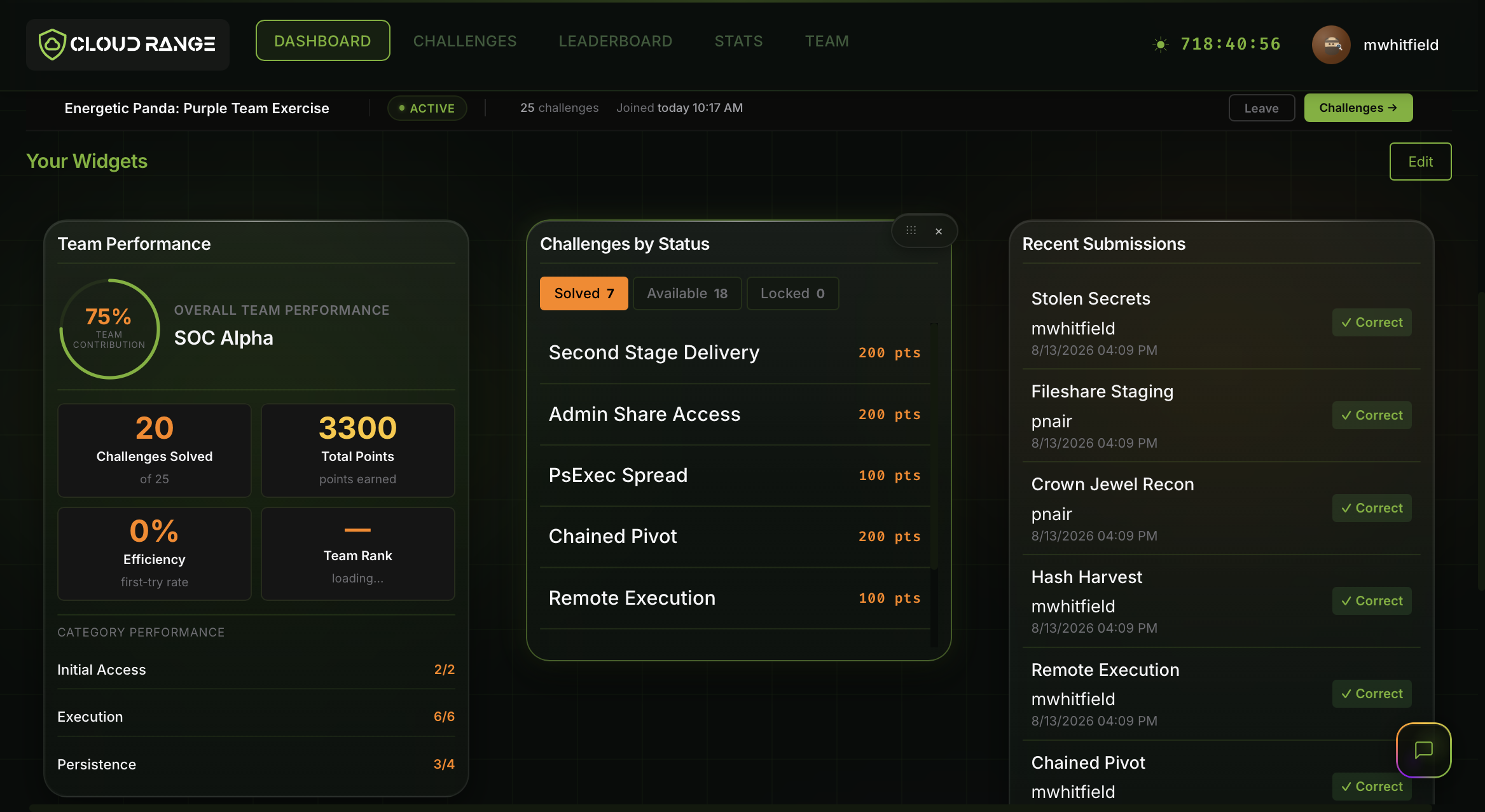
Cloud Range CTF provides a practical way to incorporate live-fire simulations into cybersecurity curriculum. Structured challenges give students objectives to work toward as they apply their skills, while faculty can evaluate performance and grade individual students, even when they’re working together in the same simulation.
Start with ready-to-go content mapped to Cloud Range simulations, customize it for your courses, or create your own CTF activities.
Deliver Hands-On Cybersecurity Training Without Building the Infrastructure
Cloud Range provides cloud-based access to realistic enterprise environments, security tools, hands-on labs, and live-fire simulations without requiring institutions to build and maintain their own cyber range infrastructure.
Students and faculty can access the platform remotely, giving institutions flexibility to support in-person, online, and hybrid programs.
Attract New Students with Career-Focused Cybersecurity Education
Give prospective students something increasingly important to their career preparation: opportunities to gain practical cybersecurity experience before they graduate. Hands-on labs and live-fire simulations can help differentiate your program while demonstrating a commitment to experiential learning and career readiness.
Become a Cybersecurity Hub in Your Region
Extend the value of your cyber range beyond the classroom. Institutions can use Cloud Range for workforce development, professional and executive education, corporate programs, cybersecurity events, research, and other initiatives.
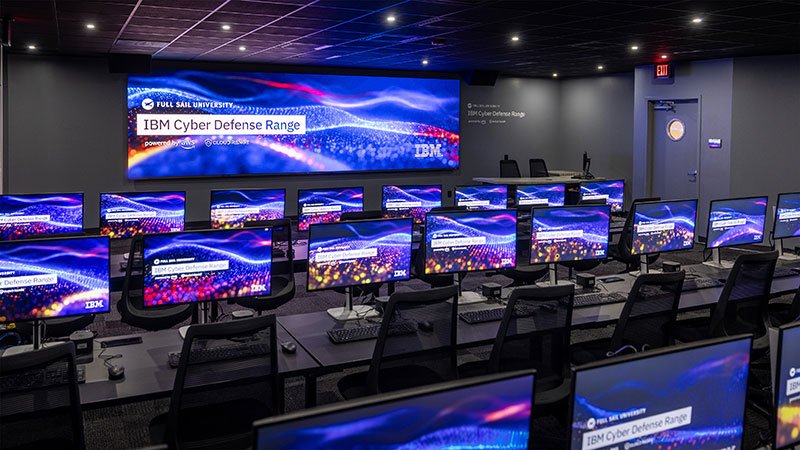
Bring Experiential Cybersecurity Education to Campus with IBM Cyber Campus
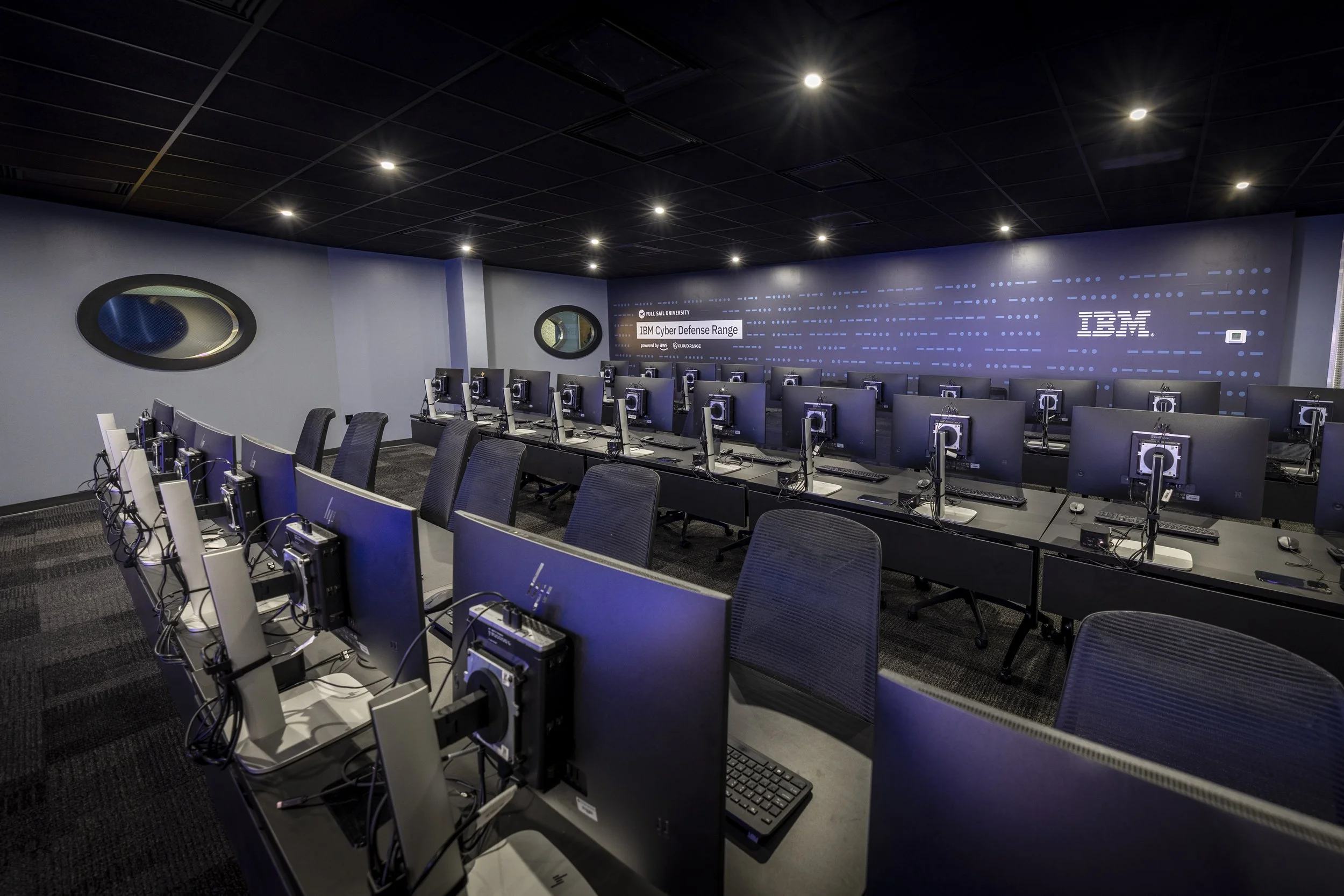
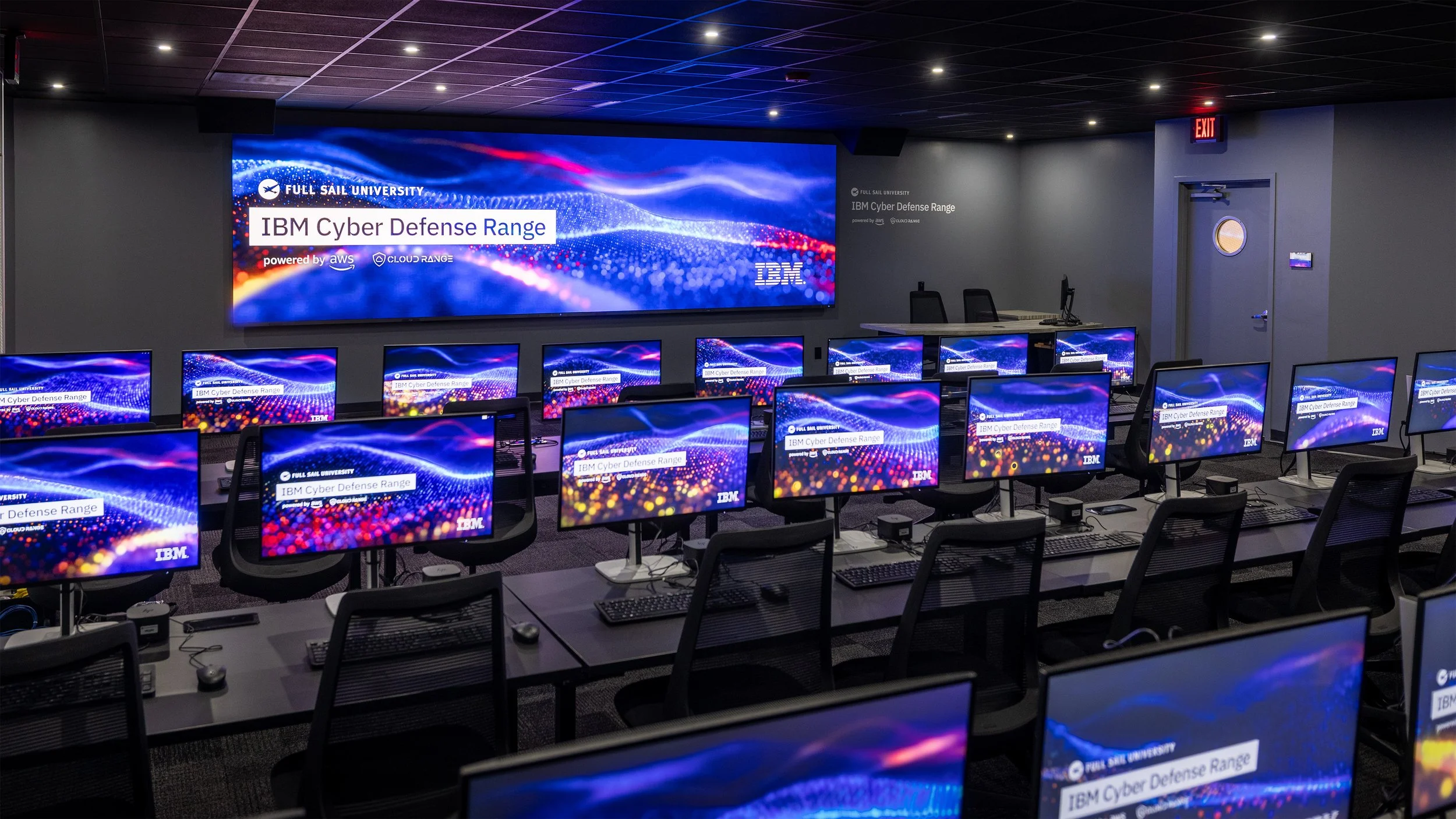
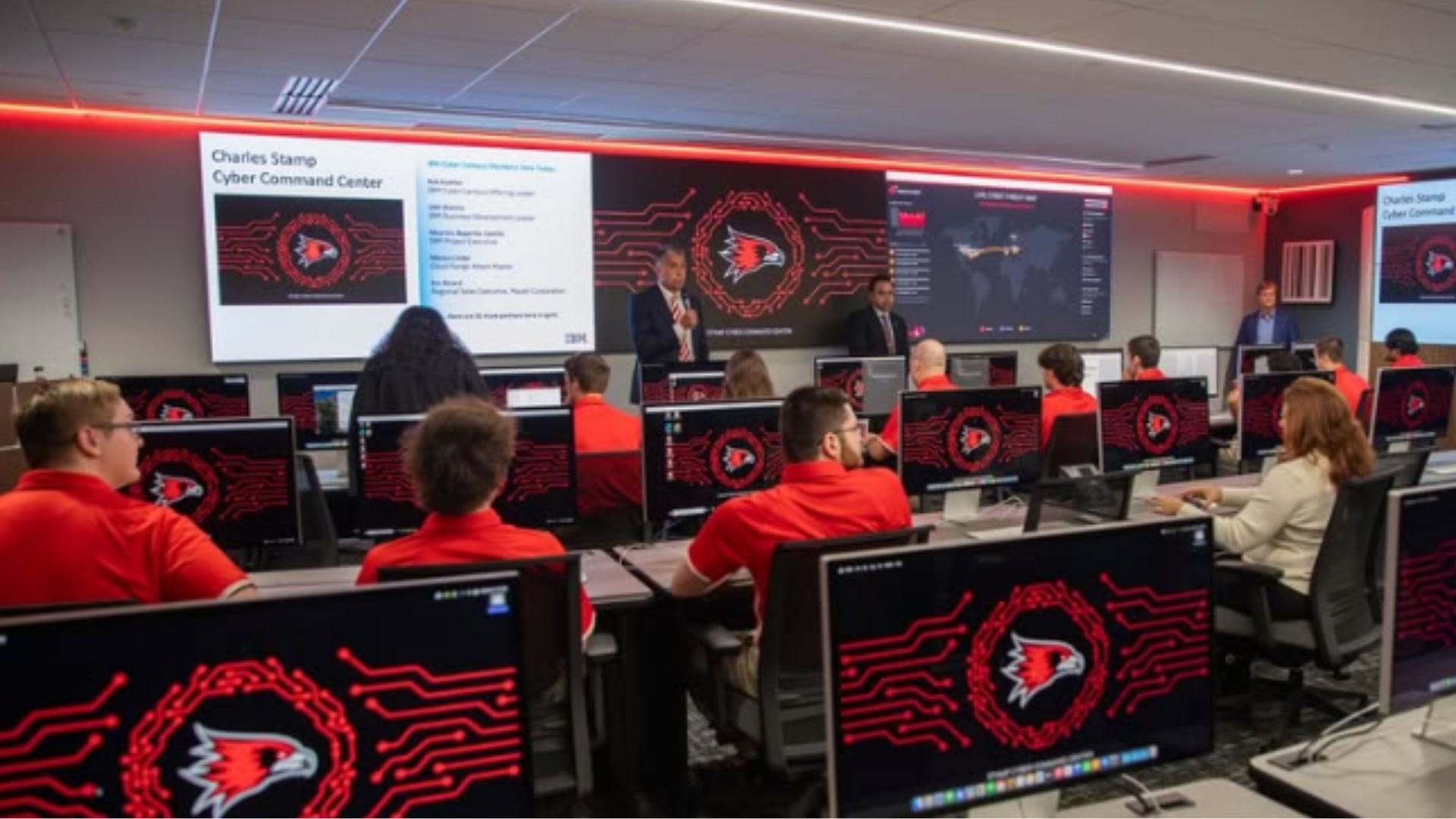
Cloud Range, IBM, and AWS come together through IBM Cyber Campus to help colleges and universities create immersive cybersecurity learning experiences that connect education with the realities of security operations.


IBM Cyber Campus combines virtual cyber ranges, purpose-built training facilities, curriculum support, and industry technology to help students and working professionals develop practical cybersecurity skills. Cloud Range provides the core cyber range and simulation platform, powering hands-on labs and live-fire cyberattack missions, while AWS provides the secure, scalable cloud foundation.
Together, the Cyber Campus ecosystem gives learners opportunities to build skills and experience defending against threats that reflect what they'll encounter on the job.

Support Cybersecurity Education Across Programs
Undergraduate Programs
Graduate Programs
Certificate Programs
Professional Development
Executive Education
Workforce Development Programs
Corporate Team and Individual Training Courses
Align Curriculum with the Needs of Employers
and Improve Student Job Placement

A cyber range will make your institution stand out among other colleges and universities by ensuring that by the time they graduate, your students will have hundreds of hours of hands-on cybersecurity training experience.
Cloud Range enables you to dynamically adapt your curriculum to increase employability and meet the demands of regional, national, and global employers.
Give your graduates a competitive advantage as they embark on the job search by equipping them with the tools and experience needed to fill security roles.

From Education to Employment
How can higher education better prepare cybersecurity students for what employers need now?
Watch this on-demand webinar with Cloud Range and IBM to explore how experiential learning, hands-on labs, and live-fire simulations can help students apply what they learn, build practical experience, and prepare for cybersecurity careers.
Frequently Asked Questions About Cyber Ranges in Higher Education
-
A cyber range gives students a safe, realistic environment to develop and apply cybersecurity skills using real-world tools, networks, and traffic. Cloud Range enables colleges and universities to incorporate hands-on labs and live-fire cyberattack simulations into undergraduate, graduate, certificate, workforce development, and other cybersecurity programs.
-
Hands-on training gives students opportunities to apply what they learn in the classroom, work with enterprise security tools, and develop practical cybersecurity skills. This type of experiential learning helps students build experience they can discuss and demonstrate as they enter the job market.
-
Cybersecurity labs typically focus on specific, targeted skills, tools, or tasks in a structured environment. Live-fire simulations go further by giving students real-world experience investigating and responding to dynamic cyberattacks using multiple skills and tools. Together, labs and simulations help students progress from learning individual skills to applying them in realistic situations.
-
Yes. Cloud Range can map hands-on labs to an institution's existing curriculum, helping faculty reinforce classroom concepts with practical skill development. Live-fire simulations can also be incorporated as students progress from learning specific skills to applying them in realistic cyberattack scenarios.
This allows faculty to add experiential learning without replacing their existing coursework. This can also help programs incorporate current threats and attack techniques as cybersecurity continues to evolve.
-
No. Cloud Range is cloud-based, giving institutions access to realistic environments, security tools, labs, and cyberattack simulations without having to build and maintain their own cyber range infrastructure.
-
IBM Cyber Campus is an experiential cybersecurity education solution designed to help colleges and universities connect cybersecurity education with workforce preparation. Cloud Range provides the cyber range and simulation engine within the Cyber Campus ecosystem, with IBM providing cybersecurity expertise and program support and AWS technology supporting the cloud infrastructure.
-
Yes. Institutions can use Cloud Range to support workforce development, professional and executive education, cybersecurity events, competitions, research, and partnerships with employers and other organizations in their region.
-
Yes. Cloud Range supports LTI integration, allowing institutions to incorporate hands-on cybersecurity learning into their existing LMS and curriculum.
-
Cloud Range's Performance Portal™ provides visibility into individual and team performance across hands-on activities. Faculty can track performance and progress over time, identify areas for improvement, and use objective data to better understand how students are applying their skills.
-
Yes. Cloud Range labs and live-fire simulations include CPE credits, allowing participants to earn continuing professional education credit while building practical cybersecurity skills.
Cloud Range Higher Education News