Why Continuous Validation Is Becoming the New Measure of Cyber Readiness
Why Continuous Validation Is Becoming the New Measure of Cyber Readiness
For years, cybersecurity programs have focused primarily on prevention. Organizations invested in better visibility, stronger controls, and faster detection with the goal of stopping attacks before they caused damage. Those investments remain essential, but they no longer answer the question security leaders are now being asked:
How do you know your organization is ready when an attack gets through?
That question is becoming more urgent as security operations grow in complexity. AI is beginning to take on operational responsibilities, cloud environments continue to expand, IT and OT are converging, and security teams are expected to respond to increasingly sophisticated attacks with greater speed and confidence.
In our view, Gartner®'s Hype Cycle for Security Operations, 2026 reflects this broader evolution. Security operations are placing greater emphasis on proving operational readiness through continuous validation.
Several technologies highlighted in the report reinforce that direction. Cyber Ranges, artificial intelligence (AI) SOC Agents, Adversarial Exposure Validation, and Continuous Threat Exposure Management (CTEM) each address different aspects of modern security operations, yet they all contribute to the same objective: helping organizations understand how their people, processes, and technologies perform under realistic conditions rather than relying solely on assumptions or isolated testing.
Validation Is Becoming an Operational Discipline
Gartner describes the changes taking place across security operations this way:
"Driven by an urgent need to abandon unscalable legacy architectures and shift from reactive models to proactive, continuous validation approaches, we are seeing sweeping structural shifts that can be categorized into three key themes: threat detection, investigation and response (TDIR) architectures being challenged; continuous threat exposure management (CTEM) continuing to be a growing priority for teams; and the evolution of threat intelligence."
While the report discusses several technology areas, one theme stands out: Organizations need ways to measure and demonstrate cyber readiness rather than relying on periodic assessments or assumptions.
The emphasis is shifting from preparedness on paper to performance in practice. Knowing that security controls are deployed or incident response plans exist is no longer enough. Organizations need evidence that analysts can detect sophisticated attacks, responders can execute under pressure, leaders can make informed decisions during an incident, and security technologies perform as expected when operating conditions become unpredictable.
Validation provides that evidence.
AI Makes Continuous Validation Even More Important
AI is one of the forces accelerating this shift.
AI SOC Agents represent an emerging technology within security operations. As organizations begin relying on AI to investigate alerts, enrich context, recommend actions, and support response activities, understanding AI performance becomes just as important as evaluating the human teams working alongside it.
Functionality alone is not enough. Organizations need to understand how AI performs when information is incomplete, signals conflict, attack techniques evolve, or unexpected conditions arise. They need evidence that AI systems can operate reliably before they are trusted with increasingly autonomous responsibilities.
Why Cyber Ranges Matter
Cyber ranges are well suited to this shift because they provide the environment needed to make continuous validation practical. As a result, they are playing a larger role in modern security operations.
There are multiple factors driving adoption, including escalating cyber threats, AI, cloud adoption, IT/OT convergence, cybersecurity skills shortages, and organizations seeking to move beyond traditional tabletop exercises. Gartner also describes cyber ranges and mentions, “As organizations increasingly adopt autonomous agents and copilots to enhance operational efficiency, cyber ranges provide secure, controlled environments for safe experimentation and scenario development."
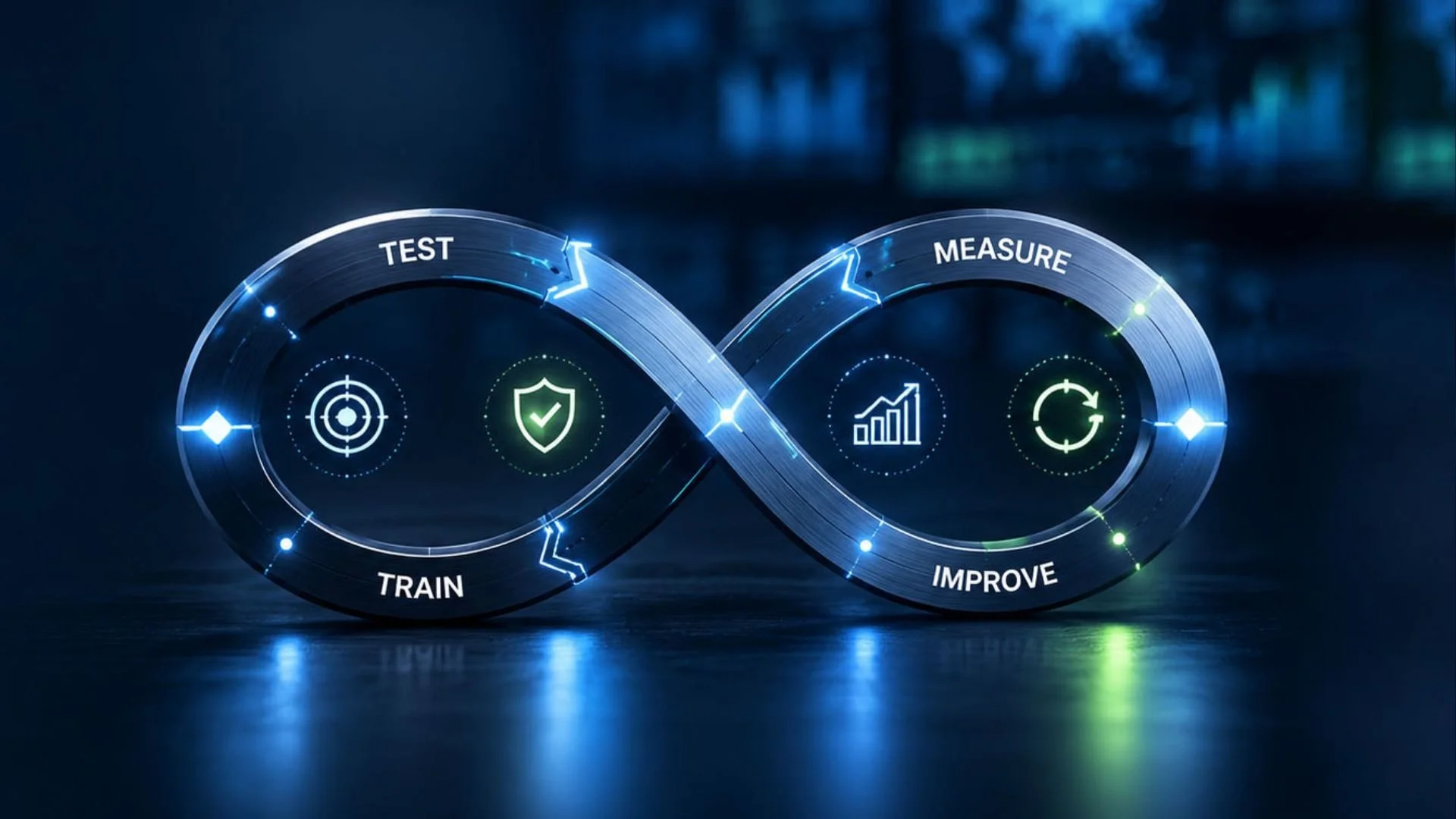
Cyber readiness is no longer viewed as a point-in-time assessment. It's becoming an ongoing process of evaluation and improvement, with organizations looking beyond annual exercises and isolated testing to continuously validate incident response processes, exercise security technologies, measure team performance, benchmark AI systems alongside human performance, and identify operational gaps before they become production problems.
Looking Ahead
Continuous validation is becoming a defining characteristic of modern security operations. As threats evolve, technologies change, AI capabilities expand, and environments become more complex, organizations will need ongoing evidence that their people, processes, and technologies are prepared for what comes next.
We're seeing this shift firsthand as organizations use the Cloud Range cyber range platform to build, measure, and improve cyber readiness over time. Through realistic enterprise environments, live-fire cyberattack simulations, expert guidance, and objective performance measurement, organizations gain measurable evidence of how human defenders, AI systems, incident response processes, and security technologies perform under real-world conditions—and continue measuring and improving readiness as threats, environments, and operations evolve.
We're proud that Cloud Range is included as a Sample Vendor in the Cyber Range category of Gartner Hype Cycle for Security Operations, 2026 research. More importantly, we're encouraged to see growing recognition of a principle that has guided our platform from the beginning: Cyber readiness isn't something organizations should assume. It requires continually proving that their people, processes, technologies, and AI are prepared to perform when it matters.
Gartner, Hype Cycle for Security Operations, 2026, by Darren Livingstone, Jonathan Nunez, 5 June 2026. GARTNER and HYPE CYCLE are trademarks of Gartner, Inc. and/or its affiliates. Gartner does not endorse any company, vendor, product or service depicted in its publications, and does not advise technology users to select only those vendors with the highest ratings or other designation. Gartner publications consist of the opinions of Gartner’s business and technology insights organization and should not be construed as statements of fact. Gartner disclaims all warranties, expressed or implied, with respect to this publication, including any warranties of merchantability or fitness for a particular purpose.