4 Ways to Avoid Cybersecurity Buyer’s Regret

4 Ways to Avoid Cybersecurity Buyer’s Regret
Cybersecurity leaders have never had more security products to choose from. Nor have they faced more pressure to make the right purchasing decisions. New risks emerge, budgets have to be allocated, and security gaps need to be addressed. The temptation is to move quickly before the next threat, compliance deadline, or board meeting arrives.
The problem is that urgency doesn't always lead to good buying decisions. Companies might invest in security products that solve the wrong problem, duplicate capabilities they already have, or promise outcomes that prove difficult to achieve once deployed.
Here are four ways to avoid cybersecurity buyer’s regret and make purchasing decisions that lead to measurable security improvements.
1. Before You Evaluate Vendors, Evaluate Your Problem
Security teams often begin with a product category rather than the operational challenge they're trying to solve. They decide they need an exposure management platform, a security validation solution, an AI security tool, or an attack surface management platform because those are the technologies dominating Gartner conference agendas and analyst reports.
But cybersecurity products within the same category can solve very different problems.
Take exposure management as an example. One platform may focus on external attack surface discovery, another on vulnerability prioritization, while a third emphasizes identity risk or cloud posture management. Choosing the right product category doesn't guarantee you're choosing the right capability for your organization.
Before you start comparing features or booking demos, step back and define the problem in operational terms. Are analysts spending too much time prioritizing vulnerabilities? Do you lack confidence that security controls are detecting real-world attacks? Is AI being adopted across the business without proper governance? Are cloud assets proliferating faster than your team can secure them?
Framing the challenge this way makes it much easier to identify which capabilities will have the greatest impact (and just as importantly, which products won't).
A useful exercise is to complete the sentence:
"We need a solution because today we can't..."
If the answer is, "We can't consistently identify which vulnerabilities pose the greatest risk to our business," or "We can't confidently validate that our detection stack will identify modern attack techniques," you're describing an actual security problem.
Products evolve quickly and categories continue to overlap, but a clearly defined problem gives you a consistent benchmark for evaluating vendors.
2. Define Success Before Demos
A well-run product demo can be incredibly persuasive. Vendors understandably want to showcase the features that differentiate their platform. The challenge is that an impressive demo doesn't necessarily prove the product will solve your problem.
Before scheduling demos, define what a successful cybersecurity investment would look like for your organization:
What measurable improvement are you hoping to achieve?
Are you trying to reduce the time analysts spend triaging vulnerabilities?
Validate that your security controls detect modern attack techniques?
Gain visibility into AI adoption?
Consolidate overlapping tools?
Whatever the objective, write it down before vendors begin presenting their solutions. This changes the conversation. Instead of asking, "Can you show us your dashboard?" or "What AI capabilities do you offer?", you're asking questions tied to business outcomes:
Can your platform reduce the time it takes us to prioritise critical risks?
How would this integrate with the tools we already use?
Can you demonstrate how we'd validate these specific attack techniques?
How much manual effort is required after deployment to keep the platform effective?
Which of these workflows are automated, and which still require analyst intervention?
This also makes vendor comparisons significantly easier. Every vendor will have a slightly different interface, workflow, or terminology, but if they're all being measured against the same success criteria, you can evaluate them on outcomes rather than presentation skills.
3. Look Beyond the Implementation Story
The most enthusiastic feedback you'll hear about a security product often comes during or shortly after deployment. However, that doesn’t necessarily predict the long-term value.
In the first few weeks, the integrations may be complete and the project team may have met its deadlines. But security buyer's regret usually emerges later, when the platform becomes part of day-to-day operations.
That's why it's worth speaking to practitioners who have lived with the product rather than relying solely on case studies, online reviews, or reference customers selected by the vendor.
Ask questions that reveal what day-to-day ownership actually looks like.
How much time does your team spend maintaining the platform each week?
How long did it take before your analysts were using it confidently?
Did it reduce manual effort as expected, or simply create another dashboard to monitor?
Which features have become indispensable, and which looked impressive during the demo but now go largely unused?
If you were buying again today, would you choose the same product?
These conversations can reveal insights that never appear in marketing materials. A platform may deliver excellent detection capabilities but require significant tuning to keep false positives under control. Another might integrate well technically but prove difficult for analysts to adopt. Conversely, a product with fewer headline features may become invaluable because it fits naturally into existing workflows.
4. Use Buyer’s Guides to Improve Your Questions
By the time you reach the final stages of evaluating vendors, you've probably accumulated product brochures, attended demonstrations, spoken to peers, and sat through more feature comparisons than you can remember. A well-written buyer's guide can help bring structure to that process.
It's tempting to use a buyer’s guide as an easy shortcut to identify the "best" product in a particular category. The problem is that no buyer's guide understands your existing technology stack, security maturity, budget, or operational priorities. A platform that ranks highly in one report may still be the wrong fit for your needs.
Instead, use cybersecurity buyer's guides to strengthen your vendor evaluation process.
As you read through guides, pay attention to the criteria they use to compare vendors. What capabilities appear consistently? Which implementation challenges are repeatedly highlighted? What questions are buyers encouraged to ask during product evaluations?
A good buyer's guide should help you compare vendors consistently. Rather than changing your priorities with every demonstration, use the guide to develop a common set of evaluation criteria and apply them throughout the selection process.
That makes it easier to compare products objectively and keeps discussions focused on solving your organization's security challenges rather than chasing the latest features or marketing claims.
Is Your Next Security Investment a Cyber Range?
A cyber range is a controlled environment where security teams can test their people, processes, and technologies against realistic, live-fire attack simulations. From validating detection capabilities to measuring incident response readiness, cyber ranges provide evidence that your security strategy performs under pressure.
If you're considering investing in a cyber range, taking the time to understand the market can help you avoid costly mistakes and select a platform that aligns with your organization's goals, security maturity, and operational requirements.
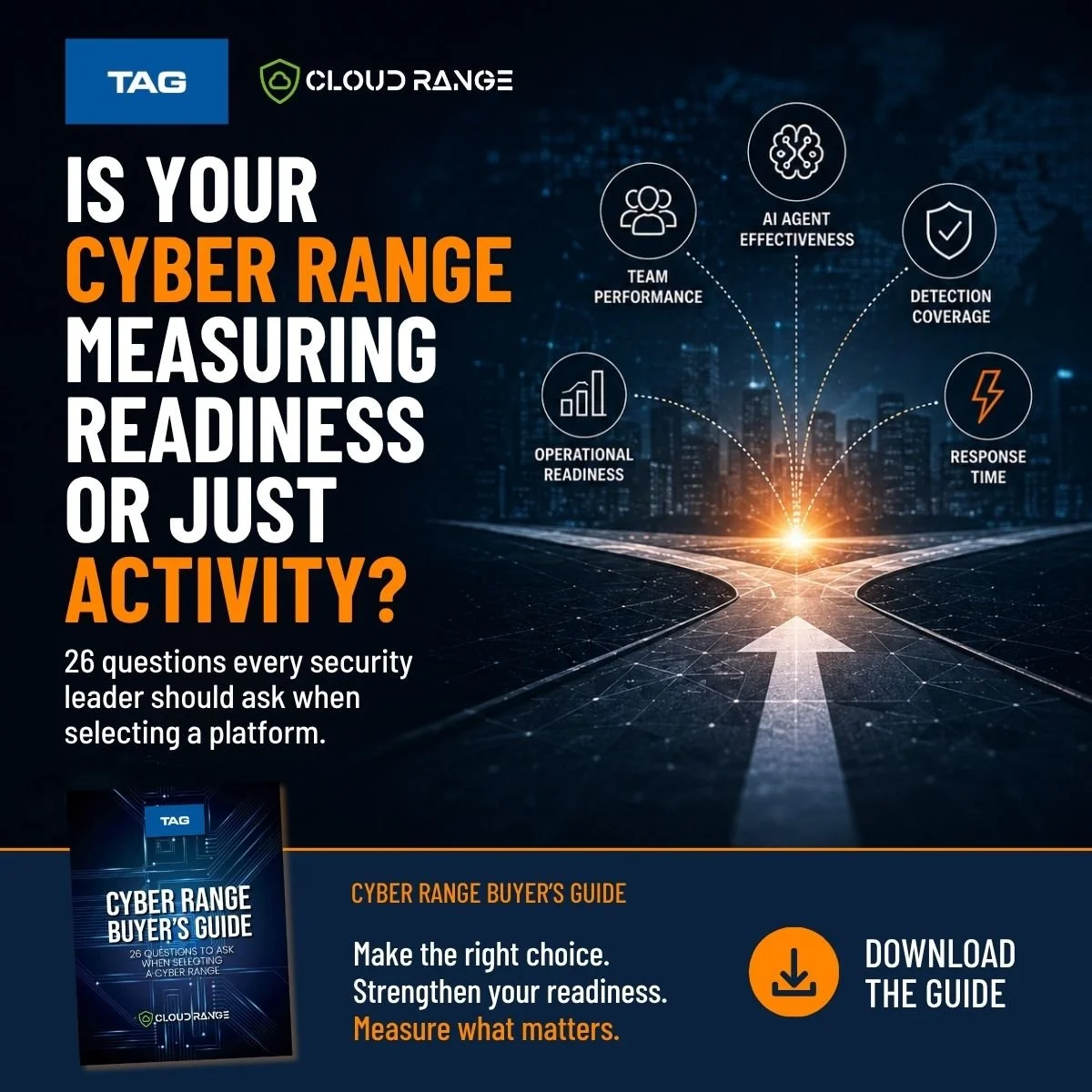
Cloud Range's Cyber Range Buyer's Guide is designed to support that process. It covers the key capabilities to evaluate, questions to ask during vendor assessments, and factors that distinguish different approaches to cyber range technology, helping you make a more informed choice.